Why Yachts Require EVA Marine Decking: A Comprehensive Analysis
1. Unparalleled Safety and Slip Resistance
The primary and most non-negotiable requirement for any surface on a moving vessel is safety. A wet deck is one of the most significant hazards on a yacht.
-
Superior Wet/Dry Traction: EVA foam sheets are manufactured with textured patterns—such as diamond, teak, or custom designs—that create a high-friction surface. Unlike hard materials that become dangerously slick when wet, EVA's inherent grip provides secure footing for passengers and crew, whether the deck is soaked from sea spray, rain, or splashes from the swimming platform. This drastically reduces the risk of slips and falls, which is paramount for protecting everyone on board, especially when the yacht is underway.
-
Cushioning Falls and Impacts: Beyond preventing slips, EVA provides a crucial cushioning effect. Its closed-cell foam structure absorbs impact. If a person or an object falls, the foam layer mitigates the force of the impact, reducing the potential for injury or damage to both the person and the deck beneath. This is particularly valuable for families with children who may play on deck.
2. Enhanced Comfort and Ergonomics
Yachts are designed for leisure and luxury, and comfort underfoot is a significant component of that experience.
-
Shock Absorption and Softness: Standing and walking on hard fibreglass, wood, or composite decks for extended periods can lead to fatigue and discomfort for the feet, legs, and back. EVA foam is soft and resilient, providing a comfortable, forgiving surface that reduces physical strain. This makes long periods of standing at the helm, socializing, or sunbathing markedly more pleasant.
-
Thermal Insulation: EVA foam acts as an effective thermal insulator. In hot climates, it prevents the deck from absorbing and retaining solar heat, keeping it cool and comfortable to walk on barefoot. Conversely, in cooler weather, it feels warmer to the touch than metal or fibreglass, enhancing comfort across various climates.

3. Exceptional Durability and Low Maintenance
The marine environment is exceptionally harsh, subjecting materials to constant UV radiation, saltwater, temperature fluctuations, and physical abrasion.
-
Weather and UV Resistance: High-quality EVA marine foam is specifically formulated with UV stabilizers to prevent fading, cracking, and degradation from prolonged sun exposure. It is also impervious to saltwater, preventing the rot, corrosion, and warping that can plague other materials.
-
Stain and Chemical Resistance: EVA is non-porous, meaning it does not absorb spills of oil, grease, wine, coffee, or sunscreen. Most spills can be easily wiped away with a damp cloth and mild soap, making it incredibly easy to maintain its pristine appearance. This contrasts sharply with teak, which requires regular and intensive scrubbing, oiling, and re-caulking to maintain its look.
-
Long-Term Structural Integrity: The closed-cell structure prevents water absorption, eliminating the risk of mold, mildew, and delamination that can occur with other materials. When professionally installed with a waterproof adhesive, it forms a seamless, watertight barrier that protects the underlying deck structure.
4. Practical Installation and Customization
EVA decking offers unparalleled flexibility in both application and design, allowing for a perfect fit and aesthetic for any yacht.
-
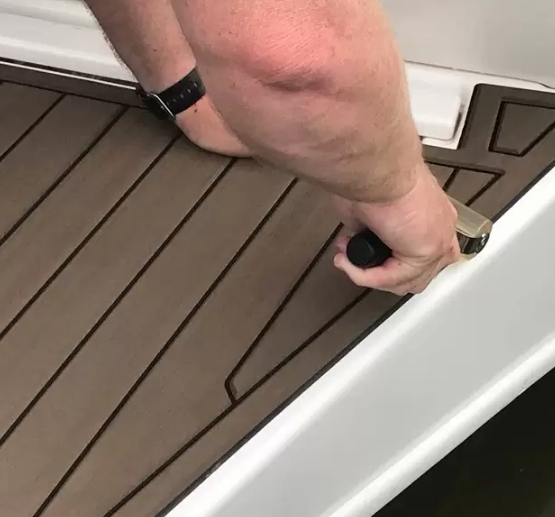
Seamless, Waterproof Application: EVA foam is typically supplied in sheets with a self-adhesive backing or is applied using a marine-grade contact adhesive. This allows for a seamless installation that covers large areas without gaps or seams where water and dirt can accumulate. This monolithic surface is both aesthetically clean and functionally superior.
-
Design Versatility: It is available in a vast array of colors, patterns, and textures. Owners can choose from a realistic teak-look finish or opt for bold colors, custom logos, and non-slip patterns that are integrated directly into the deck. This level of customization is difficult and expensive to achieve with traditional materials.

5. Contributing to Performance and Acoustics
While often overlooked, EVA decking also offers subtle performance benefits.
-
Sound Dampening: The foam layer acts as an effective sound insulator, dampening noise from foot traffic, dropped items, and engine vibration. This creates a quieter, more serene and luxurious onboard atmosphere.
-
Lightweight Nature: Although it adds a protective layer, EVA foam is remarkably lightweight. Adding it to a deck does not significantly impact the yacht's weight, and therefore, has a negligible effect on fuel efficiency and performance compared to heavier decking alternatives.
In conclusion, the use of EVA marine decking on yachts is a comprehensive solution that addresses the core demands of the maritime world. It is not merely an alternative but a significant upgrade, synergistically enhancing safety through superior slip resistance, comfort via its cushioned and insulating properties, durability against harsh elements, and aesthetic versatility for personalized luxury. Its low-maintenance character frees the owner to enjoy their vessel rather than constantly maintain it, making EVA foam an indispensable modern material for any discerning yacht owner or builder.
EVA Alphabet Interlocking Floor Mats: A Comprehensive Analysis
A Comprehensive Guide to the Uses of EVA Garden Kneepads
Related Article