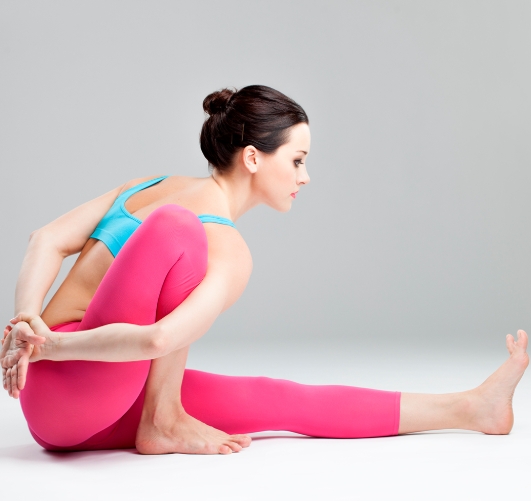
how to use yoga blocks
Everything You Need to Know About Using Yoga Blocks In Your Practice
Learn more about how to use yoga blocks and how they can support your yoga practice. HYHeva team has compiled authoritative articles and materials, and consulted professional yoga fitness trainers to provide you with professional advice.
Anyone can practice yoga, and you can practice it anywhere: all you really need is your body and a comfortable practice surface, such as a mat or carpeted floor. However, some additional yoga accessories, such as yoga blocks, can make yoga practice easier and more effective.
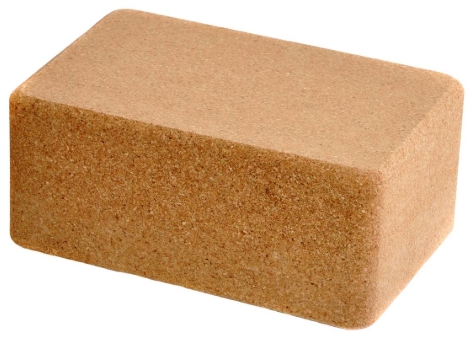
Yoga blocks are usually rectangular and made of EVA foam or cork. They are props or tools (such as yoga mats, yoga straps, and blankets) that help yoga practitioners of all levels deepen their practice. They can help yoga beginners, people with limited flexibility or mobility, those recovering from injuries, and even those looking for a greater challenge.
Read on to learn everything you need to know, including why to use yoga blocks, how to choose the right yoga block for you, and how to use yoga blocks in various yoga poses.
What is a yoga block?
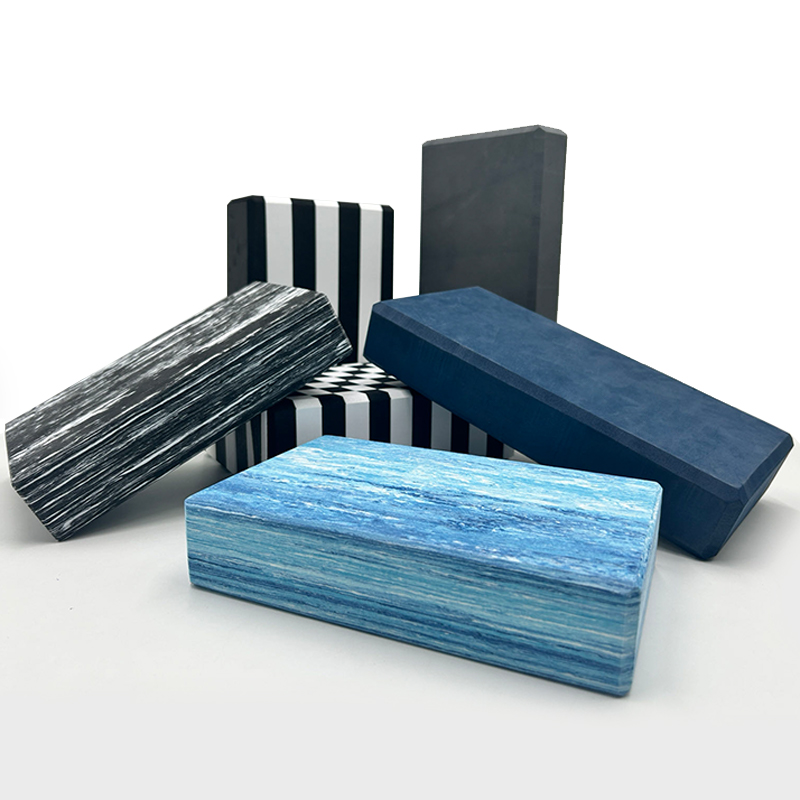
A yoga block is a prop that can enhance your yoga practice. Usually rectangular in shape and made of EVA foam or cork, yoga blocks can:
- Help you feel more supported in various poses by providing a firm object to hold onto.
- Make certain poses easier for beginners or people with different body shapes and abilities by "bringing the ground closer" to you.
- Make certain moves more challenging by adding resistance when you're ready to progress.
Why use a yoga block?
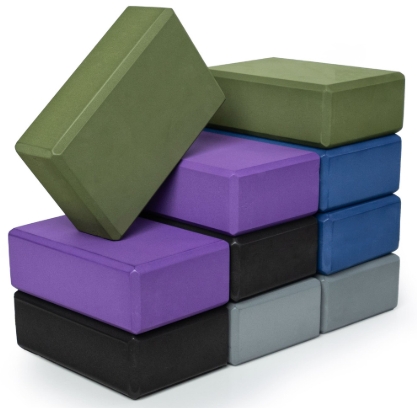
What are yoga blocks used for?Can't touch your toes in a standing forward bend? A yoga block can help. Can't comfortably rest your forehead on your mat in a seated forward bend? A yoga block can help. You get the idea: It's almost easier to ask why not to use a yoga block.
According to the American Council on Exercise (ACE), yoga blocks are often considered "extensions of your arms." Take a standing forward bend, for example: Instead of reaching for your ankles, toes, or mat, you can stand on a yoga block on your toes and reach for its highest edge.
Other reasons to use yoga blocks include:
-
They support your back, head, and/or hips.
-
They can improve coordination and flexibility in poses.
-
They make certain poses more suitable for all skill and ability levels.
-
They can add resistance and challenge to certain poses.
How to Use Yoga Block?
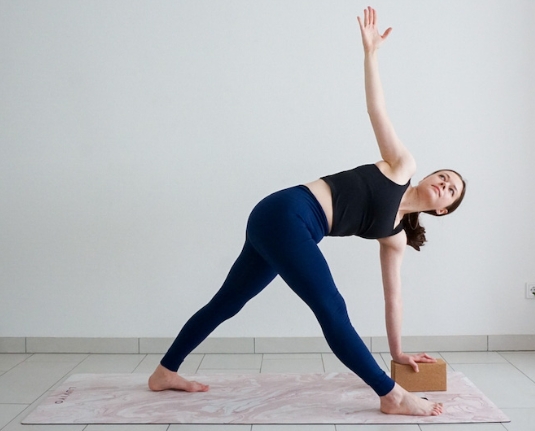
How do you use a yoga block?Typically, you'll place them on the floor or mat, under your hands, feet, back, or forehead, or hold them between your legs or hands. The specific way you use a yoga block depends on what you want to get out of it. You can use a yoga block to support yourself, add challenge, and make yoga poses more accessible. Read on for more details on how to use yoga blocks based on your goals and needs.
How Yoga Blocks Work as Support
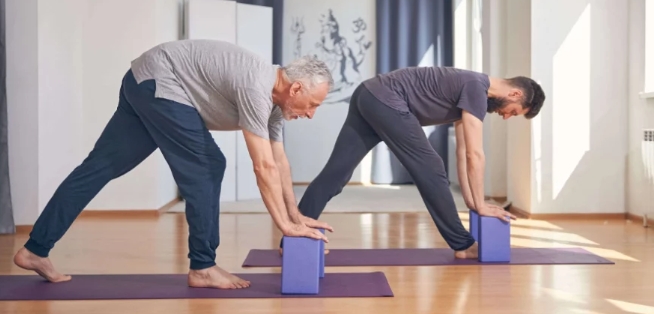
Yoga blocks can support the body and allow muscles to relax, like in the example below of the standing forward bend. If your hamstring flexibility won't let you reach all the way to your mat, placing your hands on the block in front of you can give you more support.
This also allows you to fall deeper into a stretch or pose. Consider the Splits: If you're not ready to do a full split on your own, support the block on the short side underneath your front leg. As you become more comfortable with the pose, you can rotate the block to the long side and eventually remove it completely.
How to use yoga blocks to add challenge and build strength
The HYHeva team says yoga blocks can be used as a form of resistance to make certain moves harder and build strength.
For example, you can hold a yoga block between your legs when doing poses that require core muscles so that the weight is added when transitioning between poses.
For example, you can hold a yoga block between your legs when doing poses that require core muscles so that the weight is added when transitioning between poses.
How to use yoga blocks to make yoga poses easier to practice
Beginners or people with limited mobility or flexibility may find transitions between poses challenging, and yoga blocks can help, the HYHeva team says.
For example, if you find it difficult to get your feet between your hands when going from downward dog to lunge, you can try placing a yoga block under each hand to give you more room to move your feet and legs.
Yoga Blocks for Beginners
To really get the most out of yoga blocks, follow these basic guidelines to pick the right props for your practice.
If possible, consider visiting a sporting goods store to test out different shapes, materials, and heights before purchasing your own yoga blocks. If you’re not ready to buy a yoga block yet but want to know if they’d help, you can try using a similarly sized household item, like a rolled-up blanket or sturdy book.
Which Yoga Block Is Best for You?
If you’re in the market for a set of yoga blocks for home use, the final decision largely comes down to personal preference.
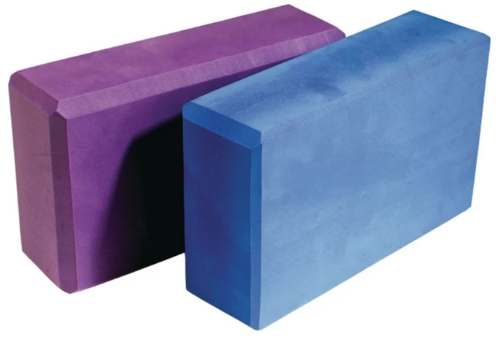
Standard yoga blocks are rectangular, but you can also find them in different shapes, including those with rounded edges or wedges to provide support in poses like backbends, as well as different colors to match your personal aesthetic.
Yoga blocks are typically made of foam or cork and come in both soft and hard varieties. We prefer the harder ones, which help with stability and balance. If sustainability is a concern for you, EVA yoga blocks are often a more sustainable choice. (EVA foam yoga block is a non-toxic, odorless, biodegradable, safe, and environmentally friendly material that is often used in children’s toys)
How Many Yoga Blocks Do You Need?
Depending on the poses you do and your goals for using the prop, you may need one or two yoga blocks.
For example, you may need two yoga blocks for poses that require you to keep both hands on your mat, whereas one block may be enough if you use it for support while balancing on one arm. If you buy yoga blocks to use at home, you may want to buy two to cover your bases.
HYHeva yoga blocks are made of firm EVA foam with rounded corners and edges for easy grip, and they are durable and easy to clean: just wipe with a few drops of dish soap and a damp towel, then air dry.
Ideal height for yoga blocks
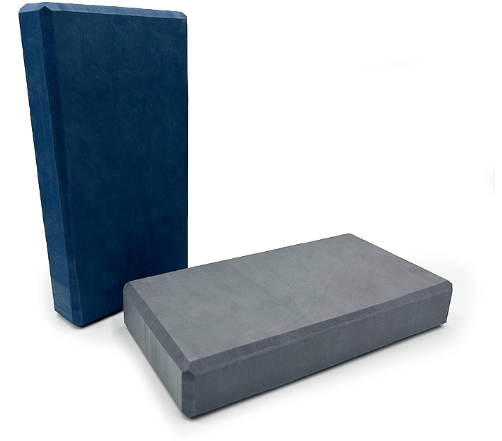
The HYHeva team says yoga blocks are typically about 9" x 6" x 4", but you can find thicker or thinner options. The best height for you depends on your personal preference (just like the shape and material of your block), and what you want to do with the block.
You can use a yoga block at three different heights: Stand the block on its shortest side for the highest height. Stand the block on its long side for a medium height. Lay the block flat on its wide side for the lowest height.

How to use yoga blocks for beginners
Ready to try yoga blocks? The HYHeva team recommends beginners start with the following yoga block poses.

Standing forward bend
-
Begin standing with two blocks a few inches in front of you, with the highest block in front of you.
-
Bend your knees slightly, bend at the hips, and fold your torso over your legs.
-
Place one hand on each block and inhale.
-
Exhale as you straighten your legs.
-
Hold for a few breaths, then slowly stand up.
Why are blocks useful? Forward bends require hamstring flexibility, which most of us haven’t spent time developing, so having a block in front of you and resting your hands on it instead of on the floor helps protect your body and maintain the integrity of the pose without compensating through your spine.
Warrior 3
-
Begin standing with your torso bent, leaning over your legs, and your hands on the two tallest blocks in front of you.
-
Extend one leg back to hip height, flexing your foot.
-
Hold for a few breaths, then lower your leg back to the starting position.
-
Repeat with your other leg.
Why are blocks useful? Learning how to balance in this challenging pose can be difficult, and having a block in front of you, under your shoulders, helps maintain proper form and balance.
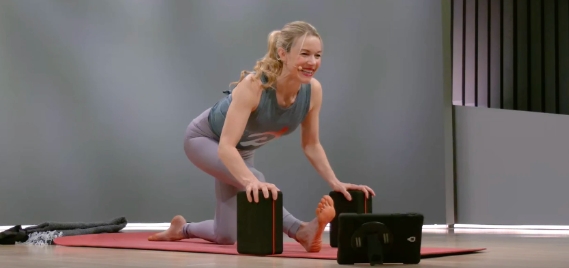
Half Splits
-
Get on your hands and knees with the highest block under each hand.
-
Place one leg between your hands and swing your heels forward to lengthen and stretch your leg and flex your foot.
-
Hold for a few breaths, keeping your spine straight.
-
Return your leg to the starting position and repeat with the other leg.
Why do blocks help? Tight hamstrings make this pose challenging for many practitioners, and without a block, your shoulders and spine will round. Placing blocks under your shoulders will give your spine room to lengthen and your hamstrings to stretch.
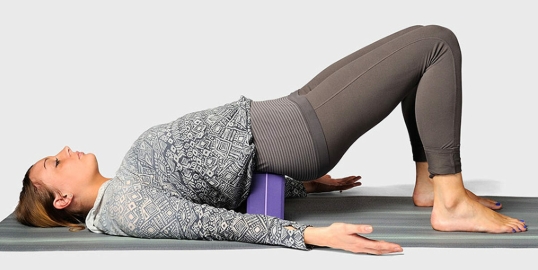
Supported Bridge
-
Lie on your back with your knees bent and your feet on the floor or mat.
-
Use your feet to push your hips up.
-
Slide the lowest block under your lower back. Release your back and hips into the block.
-
Hold for a few breaths, then remove the block.
-
Slowly lower your back, one at a time, to your mat.
Why do blocks help? Placing a yoga block under your lower back can soften muscles and relax your mind while feeling fully supported.
How to Use a Block to Add a Challenge
More advanced yogis can also use a block to further their practice. We’ve included the following two poses as examples of how a block can make a pose a little more challenging.
Boat to Low Boat
-
Begin sitting with your legs straight in front of you and your hands on the floor behind you. Hold the block between your inner thighs.
-
Lean back slightly and extend your legs so that they are at a 45-degree angle to the floor while balancing on your sitting bones and tailbone.
-
Keep your back straight and extend your arms parallel to the floor.
-
Hold this pose for a few breaths.
-
Lower your arms so that your lower and mid-back are against the mat.
-
Lower your legs so that they are just a few inches off the floor.
-
Hold this pose for a few breaths and then release. Alternatively, you can return to Boat and continue alternating between the two poses for more abdominal work.
Why does a block help? The block creates more ‘weight’ as you transition between the two poses because you’ll be squeezing your thighs to ensure the block stays in place and doesn’t fall to the floor.
Seated forward bend
-
Begin sitting with your legs straight and a yoga block at the lowest height in front of your feet.
-
Inhale, straighten your body, and reach your arms overhead.
-
Exhale, lean forward, and reach your hands to touch your ankles or toes.
-
Gently move your hands toward the block.
-
Hold for a few breaths, extending your spine with each exhale, and then slowly sit up.
Why does a yoga block help? Reaching your hands toward the block allows for a deeper stretch.
conclusion
HuiYiHao GROUP is an export-oriented entity group company. Focus on the production and sales of the industry's best EVA sheet, EVA packaging products, EVA craft products, EVA toys, furniture products and other types of EVA foam, EPE, sponge products.
The predecessor Shenzhen Huiyihao Packaging Materials Co., Ltd. was founded in 2003 in Shenzhen, Guangdong Province, mainly for domestic first-line brands and world-renowned enterprise customers.
how to use a yoga foam roller