Are EVA building blocks the same as LEGOs?
Are EVA building blocks the same as LEGOs?
Table of Contents
- Introduction: The World of Building Blocks
- What are EVA Building Blocks?
- Key Differences Between EVA Building Blocks and LEGOs
- General Parameters of EVA Foam Building Blocks
- Expert Opinions on EVA Building Blocks and LEGOs
- Conclusion: Choosing the Right Building Blocks
- FAQs
Introduction: The World of Building Blocks
Building blocks have long been a staple in childhood play and educational activities, fostering creativity, problem - solving skills, and spatial awareness. Among the most well - known building block brands is LEGO, which has dominated the market for decades. However, in recent years, EVA building blocks have emerged as a popular alternative. A common question among parents, educators, and toy enthusiasts is, “Are EVA building blocks the same as LEGOs?” In this blog, we will explore the similarities and differences between these two types of building blocks, helping you make an informed decision when choosing the right set for play or learning.

What are EVA Building Blocks?
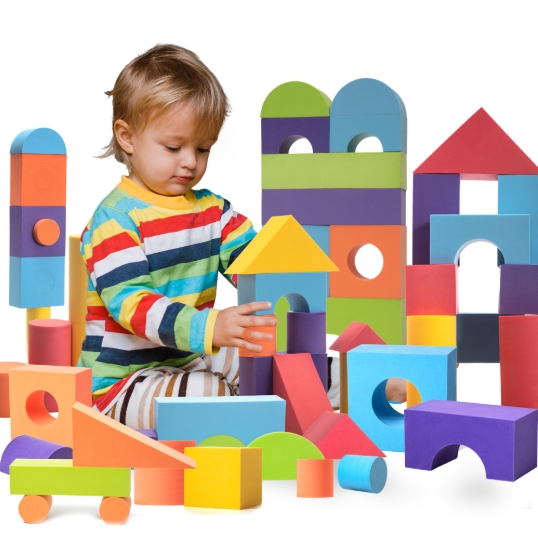
EVA, or Ethylene - Vinyl Acetate, is a soft, flexible, and lightweight material. EVA building blocks are made from this foam - like material, which makes them safe for children to handle, even at a young age. They come in a variety of shapes, sizes, and colors, allowing for endless creative possibilities. If you want to learn more about the properties of EVA foam itself, check out our previous blog What is eva foam.

Key Differences Between EVA Building Blocks and LEGOs
Material and Safety
EVA building blocks are made from soft EVA foam, which means they are lightweight, non - toxic, and do not pose a risk of injury if dropped or stepped on. This makes them an excellent choice for younger children or for use in educational settings where safety is a top priority.
On the other hand, LEGOs are made from hard plastic. While they are also designed with safety in mind, the small, hard pieces can be a choking hazard for young children. Additionally, if a LEGO piece is stepped on, it can cause significant pain.
Design and Compatibility
EVA building blocks typically feature a simple interlocking design, often with slots, tabs, or Velcro - like surfaces. This design makes them easy to assemble and disassemble, even for small hands. However, they are generally not compatible with other building block systems, including LEGOs.
LEGOs, on the other hand, have a standardized stud - and - tube connection system. This means that LEGOs from different sets, even those produced years apart, can be combined to create larger and more complex structures. The high level of compatibility is one of the main attractions of the LEGO system.
Building Experience and Creativity
The soft and flexible nature of EVA building blocks allows for a more tactile building experience. They can be easily bent, twisted, and molded, enabling users to create organic - shaped structures. However, due to their lightweight and less rigid nature, very large or complex structures may lack stability.
LEGOs offer a more rigid building experience. The precise fit of the pieces allows for the creation of sturdy, detailed, and highly complex structures. LEGO also provides a wide range of themed sets, from space ships to castles, which can inspire specific creative projects.
Price and Affordability
EVA building blocks are often more affordable than LEGOs. The lower cost of the EVA material and the simpler manufacturing process contribute to this price difference. This makes EVA building blocks a great option for those on a budget or for large - scale educational projects.
LEGOs, with their brand recognition, extensive research and development, and high - quality production, tend to be more expensive. However, many LEGO enthusiasts believe that the investment is worth it for the long - lasting quality and the wide range of building possibilities.

General Parameters of EVA Foam Building Blocks
|
Parameter
|
Description
|
|
Material
|
Ethylene - Vinyl Acetate (EVA) foam
|
|
Weight per Block
|
Approximately 5 - 15 grams (depending on size)
|
|
Size Range
|
Small blocks: 2 - 5 cm; Medium blocks: 5 - 10 cm; Large blocks: 10 - 20 cm
|
|
Color Variety
|
Usually comes in a range of primary and secondary colors, often with fluorescent or pastel options
|
|
Interlocking Mechanism
|
Slots, tabs, or Velcro - like surfaces
|
|
Recommended Age
|
18 months and above
|
Expert Opinions on EVA Building Blocks and LEGOs
Dr. Sarah Johnson, a child development expert, states, “Both EVA building blocks and LEGOs have their own educational benefits. EVA building blocks are ideal for very young children as they are safe and easy to manipulate, helping to develop fine motor skills. LEGOs, on the other hand, are better suited for older children who can handle the small pieces and are interested in more complex building projects that require planning and problem - solving.”
Toy designer Mark Thompson adds, “The versatility of EVA building blocks in terms of shape and texture offers a unique creative outlet. While LEGOs have a more structured building system, EVA blocks allow for a more free - form approach to construction, which can be very beneficial for artistic and imaginative development.”

Conclusion
In conclusion, EVA building blocks and LEGOs are not the same. They each have their own advantages and disadvantages in terms of material, design, building experience, and price. EVA building blocks are a great choice for younger children, those on a budget, or for projects that require a softer, more tactile building experience. LEGOs, on the other hand, are better suited for older children and enthusiasts who value precision, compatibility, and the ability to create highly detailed and complex structures.
FAQs
Q: Are EVA building blocks suitable for children under 3 years old?
A: Yes, EVA building blocks are a great option for children under 3 as they are soft, non - toxic, and do not pose a choking hazard like small LEGO pieces.
Q: Can I mix EVA building blocks with LEGOs?
A: No, due to their different design and interlocking mechanisms, EVA building blocks and LEGOs are not compatible.
Q: How durable are EVA building blocks compared to LEGOs?
A: LEGOs are generally more durable as they are made of hard plastic. EVA building blocks, while long - lasting for normal play, may be more prone to wear and tear over time, especially if bent or twisted frequently.

About us
HuiYiHao GROUP is an export-oriented entity group company. Focus on the production and sales of the industry's best EVA Foam sheet, EVA Children's Toys,Cosplay Material Series,EVA Swimming Accessories, EVA Packaging Series and EVA Finished Product Series, Paper Box, Yoga Accessories.
The predecessor Shenzhen Huiyihao Packaging Materials Co., Ltd. was founded in 2003 in Shenzhen, Guangdong Province, mainly for domestic first-line brands and world-renowned enterprise customers. Our factory and foam factory together cover a total area of 51,000 square meters, with a staff of 150 people. Our products include foam sheet materials, children's toys, and outdoor goods. As long as it involves EVA, EPE, or sponge products, we can produce them. You can visit our store and find a product that interests you.
Do autistic toddlers play with blocks?
At what age should a child start playing with building blocks?