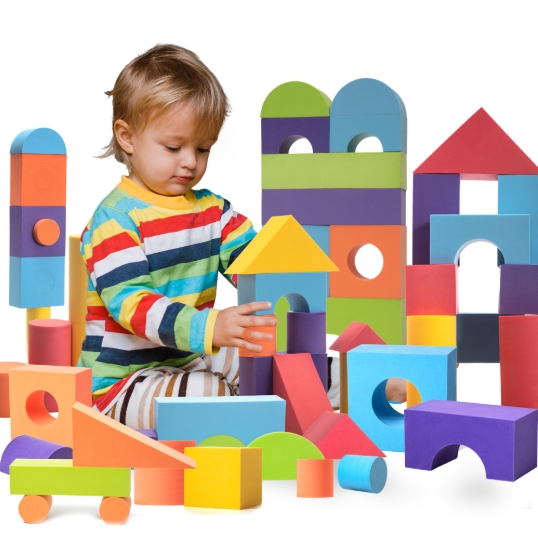
Are building blocks educational toys?
Answers to Common Questions About Children's Building Blocks
Table of Contents
- Introduction: The Role of Building Blocks in Early Childhood Development
- Are Building Blocks Educational Toys? Key Developmental Benefits
- EVA Building Blocks vs. ABS Building Blocks: A Comprehensive Comparison
- Expert Insights: What Educators and Child Development Specialists Say
- Industry FAQs: Answering Common Questions About Building Blocks
Introduction: The Role of Building Blocks in Early Childhood Development
Building blocks have long been staples in nurseries, classrooms, and playrooms, but the question remains: Are they truly educational toys? Beyond mere entertainment, building blocks—especially materials like EVA building blocks and traditional ABS building blocks—offer profound developmental benefits. In this blog, we’ll explore their educational value, compare EVA and ABS blocks, and address common industry questions.

Are Building Blocks Educational Toys? Key Developmental Benefits
Building blocks are far more than toys; they’re tools for learning. Here’s how they foster growth:
Cognitive Skills: Problem-Solving and Spatial Awareness
As children stack, connect, and construct, they intuitively learn about balance, geometry, and cause-and-effect. EVA building blocks, with their lightweight and flexible design, allow even toddlers to experiment with structures without frustration, enhancing logical thinking.
Creativity and Imagination: Open-Ended Play
Unlike toys with fixed purposes, blocks encourage open-ended play. Kids can build towers, cars, or imaginary worlds, stimulating creativity and symbolic thinking. This freedom to create is a cornerstone of early childhood education.
Fine Motor Skills and Hand-Eye Coordination
Picking up, grasping, and joining blocks refine fine motor skills, crucial for writing and self-care later. EVA blocks, with their soft, easy-to-hold edges, are ideal for tiny hands, while ABS blocks (with smaller, interlocking pieces) challenge older children’s precision.
Social and Emotional Development
Building together teaches collaboration, communication, and patience. Whether sharing pieces or working on a group project, blocks promote social skills and emotional resilience—key components of holistic development.

EVA Building Blocks vs. ABS Building Blocks: A Comprehensive Comparison
Both materials have unique advantages, depending on age, purpose, and values.
Safety: Soft Edges vs. Rigid Structures
- EVA Building Blocks: Made from soft, non-toxic EVA foam, they have no sharp edges, making them safe for infants and toddlers who mouth toys. They’re also lightweight, reducing the risk of injury from dropped blocks.
- ABS Building Blocks: While non-toxic, ABS plastic is rigid and may have small, tight-fitting pieces that pose a choking hazard for young children. Their hard edges can also cause minor injuries if mishandled.
Durability and Longevity
- EVA: Resistant to water and bending, EVA blocks withstand rough play but may show wear over years of heavy use (e.g., peeling edges).
- ABS: Extremely durable and long-lasting, ABS blocks retain their shape and color for decades, making them a popular choice for schools and large families.
Environmental Friendliness
- EVA: Often made from recycled materials and 100% recyclable, EVA is a more sustainable choice, aligning with eco-conscious parenting.
- ABS: While non-toxic, traditional ABS is derived from petroleum and less environmentally friendly, though some brands now offer recycled ABS options.
Weight and Portability
- EVA: Lightweight and easy to carry, EVA blocks are perfect for travel or on-the-go play.
- ABS: Heavier and bulkier, ABS sets are better suited for stationary play areas.
Cost-Effectiveness
- EVA: Generally more affordable, with sets priced lower than premium ABS brands.
- ABS: Higher upfront cost (especially for well-known brands) but offers long-term value due to durability.

Expert Insights: What Educators and Child Development Specialists Say
Dr. Sarah Johnson, a child development psychologist, emphasizes: “Building blocks are foundational for STEAM learning—they teach science (materials), technology (engineering), and math (shapes and measurements) in a playful way. EVA blocks, in particular, bridge the gap between safety and learning for very young children, while ABS blocks challenge older kids to build complex structures.”
Educator Maria Gonzalez adds, “In my classroom, I use both materials. EVA blocks help preschoolers develop confidence in their abilities, while ABS sets encourage collaborative projects in elementary school. Both are essential for holistic skill-building.”
Industry FAQs: Answering Common Questions About Building Blocks
Are EVA building blocks suitable for toddlers?
Yes! EVA blocks are ideal for toddlers (6+ months) due to their soft, non-toxic material and large, easy-to-grasp pieces, reducing choking risks and promoting sensory exploration.
Can ABS building blocks be recycled?
Traditional ABS is recyclable but requires special facilities. Look for brands offering recycled ABS or opt for EVA blocks for a more eco-friendly choice.
How do I clean EVA and ABS building blocks?
- EVA: Wipe with a damp cloth or mild soapy water (avoid submerging in water for long periods).
- ABS: Wash with warm, soapy water or sanitize in the top rack of a dishwasher (check manufacturer guidelines).
Where can I find the blog What is EVA Foam?
Learn more about the versatility and benefits of EVA foam in our detailed blog: What is EVA Foam? A Comprehensive Guide to Its Uses and Advantages.
Conclusion
Building blocks—whether EVA or ABS—are undeniably educational toys, fostering cognitive, physical, and social growth. EVA blocks shine in safety, sustainability, and accessibility for young children, while ABS blocks excel in durability and complex constructions for older kids. By understanding their unique strengths, you can choose the perfect set to inspire learning through play.
Invest in quality building blocks today, and watch your child build not just structures, but a foundation for lifelong learning.
At what age should a child start playing with building blocks?
What is building blocks?