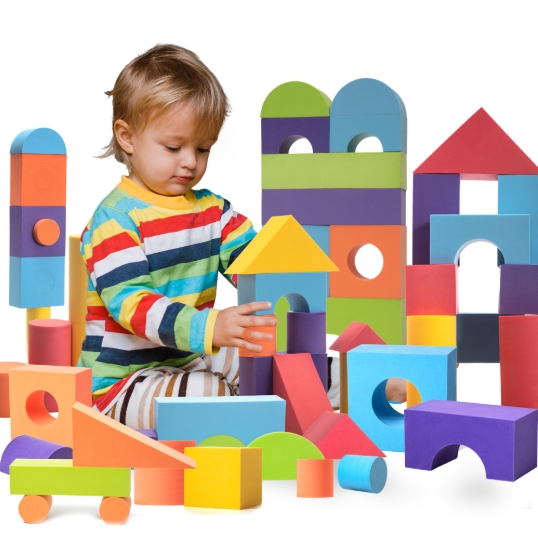
At what age should a child start playing with building blocks?
The Best Ages for Children to Play with Building Blocks
Table of Contents
- Introduction
- The Ideal Age Range for Starting Building Blocks
- Why EVA Building Blocks Are Perfect for Early Childhood Development
- Key Material Parameters of EVA Building Blocks
- EVA vs. ABS Building Blocks: A Comprehensive Comparison
- Expert Insights on Toddler Play and Building Blocks
- FAQs About EVA Building Blocks and Early Childhood Play
- Conclusion
Introduction
Building blocks aren't just toys, you know. They're super useful for helping kids develop their thinking skills, motor skills, and creativity. But when's the best time for a kid to start playing with them? In this guide, we're gonna look at the best age to introduce building blocks, especially EVA building blocks. They're a great choice for little ones because they're safe, flexible, and good for the environment. We'll also compare EVA blocks with the more common ABS blocks and share some advice from experts to help you make the right decision.

The Ideal Age Range for Starting Building Blocks
Most experts say that kids can start playing with building blocks as early as 12 to 18 months old. At first, you should get them big, soft blocks that are easy to hold and won't be a choking risk. Here's a breakdown by age:
12-24 Months
At this age, kids are all about exploring with their senses and just doing some simple stacking.
You should pick blocks that are light, non-toxic, and soft, like EVA building blocks. That way, if they fall while playing, they won't get hurt.
Benefits: It helps them develop hand-eye coordination and an understanding of space.
2-3 Years
Now you can introduce slightly smaller blocks with different shapes and colors.
Encourage them to use their imagination, like building "towers" or "houses."
Benefits: This helps them with problem-solving and also with learning language as they name the shapes and colors.
3+ Years
Sets with interlocking pieces are great now.
Kids can follow instructions, build really detailed structures, and even play together with others.

Why EVA Building Blocks Are Perfect for Early Childhood Development
EVA (ethylene-vinyl acetate) building blocks are really special because they're safe, versatile, and great for a kid's development:
Key Material Parameters of EVA Building Blocks
|
Parameter
|
EVA Building Blocks
|
|
Material
|
EVA foam (100% non-toxic, phthalate-free)
|
|
Density
|
30-40 kg/m³ (lightweight and soft)
|
|
Safety Certifications
|
ASTM F963 (USA), EN 71 (EU), CPSIA compliant
|
|
Flexibility
|
High elasticity, resistant to cracking
|
|
Weight per Block
|
5-10g (ideal for tiny hands)
|
|
Water Resistance
|
Waterproof and easy to clean
|
|
Environmental Impact
|
100% recyclable, low carbon footprint
|
Core Advantages
Super Safe: They have soft edges and non-toxic materials, which is perfect for toddlers who might drop or chew on their toys.
Lightweight: They're so light that even 1-year-olds can easily pick them up and stack them, so they won't get frustrated while playing.
Unleash Creativity: Unlike hard blocks, EVA blocks can be bent or put together in all sorts of cool ways, so kids can really let their imagination run wild.
Good for the Planet: They're a much better choice for the environment compared to plastic ABS blocks.
EVA vs. ABS Building Blocks: A Comprehensive Comparison
ABS (acrylonitrile butadiene styrene) blocks are pretty popular, but they're really different from EVA blocks:
|
Feature
|
EVA Building Blocks
|
ABS Building Blocks
|
|
Safety for Toddlers
|
✅ Soft, no sharp edges; safe for mouthing
|
❌ Hard edges; small pieces could be a choking hazard
|
|
Weight
|
✅ Lightweight (5-10g per block)
|
❌ Heavier (15-30g per block), tough for babies to handle
|
|
Durability
|
✅ Resistant to bending but might show a little wear over time
|
✅ Super durable, can take a lot of rough play
|
|
Environmental Impact
|
✅ Recyclable, made without harmful chemicals
|
❌ Made from petroleum-based plastics; not easy to recycle
|
|
Cost
|
✅ Usually cheaper for beginner sets
|
❌ A bit pricier for high-quality sets
|
|
Ideal Age
|
✅ Best for 12 months and up (especially toddlers)
|
❌ Better for 3+ years (when kids can manage rigid pieces)
|
Expert Insights on Toddler Play and Building Blocks
Dr. Sarah Johnson, a pediatric occupational therapist, says:
"For kids under 2, EVA building blocks are really great. They're soft and light, so kids can explore safely, which is really important for developing their sense of touch. As kids get older, you can mix EVA and ABS blocks to give them new challenges, but always make sure the blocks are the right size for their age to avoid any safety problems."
Dr. Michael Chen, a child development psychologist, adds:
"Playing with building blocks at any age helps kids' brains grow, but the time between 18 and 36 months is really important. EVA blocks, with their bright colors and easy-to-hold surfaces, help toddlers feel more confident in using their hands and get them excited about being creative."
FAQs About EVA Building Blocks and Early Childhood Play
1. What's the youngest age for EVA building blocks?
EVA blocks are safe for 12-month-olds, but make sure the blocks are bigger than 2.5 inches (6cm) so there's no choking risk. And always keep an eye on kids under 3 while they're playing.
2. Are EVA blocks as tough as ABS?
EVA blocks aren't as hard as ABS, but they're really strong against tearing and water. They're perfect for the early years, and you can switch to ABS sets as your kid gets older.
3. How do I clean EVA building blocks?
It's easy! Just wipe them with a damp cloth or wash them with soapy water. Since they're waterproof, it's a breeze to keep them clean.
4. Can EVA blocks be used with other kinds of blocks?
Sure! EVA blocks go great with wooden or ABS sets. This way, kids can mix different textures and build all kinds of cool structures.
Conclusion
Kids can start playing with EVA building blocks as early as 12 months old. It's a safe and fun way for them to learn and reach their developmental milestones. While ABS blocks are good for older kids, EVA blocks are the best choice for toddlers because they're safe, flexible, and good for the environment. By getting the right blocks for your kid's age, you're not just giving them a toy. You're helping them build the foundation for creativity, problem-solving, and a love of learning.
Ready to get started? Look for EVA building block sets that are made for your child's age, and watch them have a blast building all sorts of fun things!

About us
HuiYiHao GROUP is an export-oriented entity group company. Focus on the production and sales of the industry's best EVA Foam sheet, EVA Children's Toys,Cosplay Material Series,EVA Swimming Accessories, EVA Packaging Series and EVA Finished Product Series, Paper Box, Yoga Accessories.
The predecessor Shenzhen Huiyihao Packaging Materials Co., Ltd. was founded in 2003 in Shenzhen, Guangdong Province, mainly for domestic first-line brands and world-renowned enterprise customers. Our factory and foam factory together cover a total area of 51,000 square meters, with a staff of 150 people. Our products include foam sheet materials, children's toys, and outdoor goods. As long as it involves EVA, EPE, or sponge products, we can produce them. You can visit our store and find a product that interests you.
Are EVA building blocks the same as LEGOs?
Are building blocks educational toys?