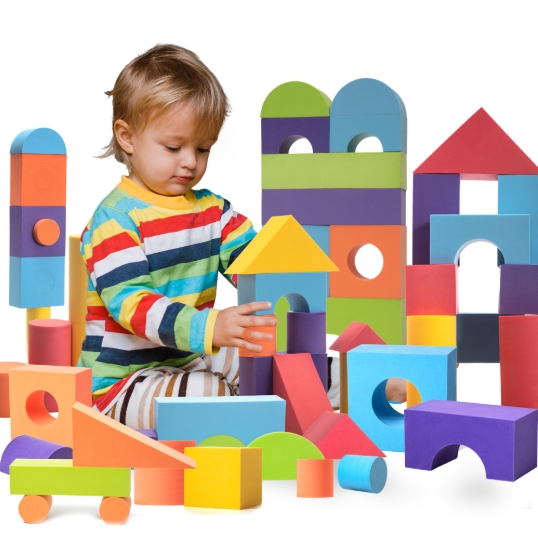
Do autistic toddlers play with blocks?
Do autistic toddlers play with blocks?
Table of Contents
Understanding Autism and Play Patterns
Autism spectrum disorder (ASD) encompasses a wide range of conditions characterized by challenges with social skills, repetitive behaviors, speech, and nonverbal communication. Play, a fundamental aspect of childhood development, often manifests differently in autistic toddlers. Unlike typical children who might engage in imaginative and interactive play from an early age, autistic toddlers may exhibit restricted or repetitive play patterns, such as lining up toys, spinning objects, or focusing on specific parts of a toy rather than the whole. This raises the question: Do autistic toddlers play with blocks? The answer can vary greatly from child to child, but one type of block that has shown promise in engaging these young minds is EVA building blocks.

The Appeal of EVA Building Blocks for Autistic Toddlers
EVA (ethylene-vinyl acetate) building blocks have several features that make them particularly attractive for autistic toddlers. Firstly, their soft and lightweight nature eliminates the risk of injury, which is crucial considering that some autistic children may have sensory sensitivities or engage in self-stimulatory behaviors that could lead to accidental harm. Unlike traditional wooden or plastic blocks, EVA building blocks are gentle to the touch, making them comfortable for little hands to grasp and manipulate.
Secondly, EVA building blocks come in a variety of bright colors and shapes. For autistic toddlers who may be visually stimulated, these vibrant hues can capture their attention and encourage exploration. The different shapes also allow for a range of building possibilities, from simple towers to more complex structures, which can help develop fine motor skills, spatial awareness, and problem-solving abilities.
Another advantage is their versatility. EVA building blocks can be used in sensory play activities. For example, placing them in a sensory bin filled with rice or water can create a multi-sensory experience that many autistic children find soothing and engaging. They can also be incorporated into therapy sessions as a tool to promote social interaction, communication, and imaginative play.
If you're interested in learning more about the material itself, check out our previous blog What is eva foam, which delves into the properties and benefits of EVA foam, the material used to make these wonderful building blocks.

Expert Opinions on EVA Building Blocks and Autism
According to Dr. Sarah Johnson, a child psychologist specializing in autism, “EVA building blocks can be an excellent tool for autistic toddlers. Their tactile nature provides a calming sensory experience, while the open-ended play opportunities they offer can help improve cognitive and motor skills. Additionally, the act of building with blocks can serve as a form of self-expression for children who may struggle with verbal communication.”
Occupational therapist Lisa Brown also emphasizes the value of EVA building blocks in therapy. “I often use EVA building blocks in my sessions with autistic children. The soft texture is less intimidating for those with tactile sensitivities, and the ability to create something tangible gives them a sense of accomplishment. It’s a great way to work on skills like hand-eye coordination, planning, and following instructions.”

General Parameters of EVA Building Blocks
|
Parameter
|
Description
|
|
Material
|
High-quality EVA foam, non-toxic, BPA-free
|
|
Size
|
Varies (common sizes range from 1 - 3 inches in each dimension)
|
|
Weight
|
Lightweight, typically less than 50 grams per block
|
|
Color Options
|
Assorted bright colors such as red, blue, yellow, green, etc.
|
|
Shape Options
|
Cubes, rectangles, triangles, cylinders, and other geometric shapes
|
|
Interlocking Mechanism
|
Smooth, easy-to-connect surfaces for secure building
|
|
Safety Standards
|
Meets international safety standards for children's toys
|
FAQs About EVA Building Blocks and Autistic Toddlers
Q: Are EVA building blocks safe for autistic toddlers?
A: Yes, EVA building blocks are very safe. They are made from non-toxic materials, are soft, and lightweight, reducing the risk of injury during play.
Q: How can EVA building blocks help improve social skills in autistic toddlers?
A: Through collaborative building activities, autistic toddlers can learn to take turns, share, and communicate their ideas with others. Group play with EVA building blocks provides opportunities for social interaction in a fun and non-threatening environment.
Q: Do all autistic toddlers like EVA building blocks?
A: Just like with any toy, individual preferences vary. However, the sensory-friendly and versatile nature of EVA building blocks makes them appealing to many autistic toddlers. It may take some time and patience to introduce the blocks and find the way your child enjoys playing with them most.

About us
HuiYiHao GROUP is an export-oriented entity group company. Focus on the production and sales of the industry's best EVA Foam sheet, EVA Children's Toys,Cosplay Material Series,EVA Swimming Accessories, EVA Packaging Series and EVA Finished Product Series, Paper Box, Yoga Accessories.
The predecessor Shenzhen Huiyihao Packaging Materials Co., Ltd. was founded in 2003 in Shenzhen, Guangdong Province, mainly for domestic first-line brands and world-renowned enterprise customers. Our factory and foam factory together cover a total area of 51,000 square meters, with a staff of 150 people. Our products include foam sheet materials, children's toys, and outdoor goods. As long as it involves EVA, EPE, or sponge products, we can produce them. You can visit our store and find a product that interests you.
Why is building blocks good for the brain?
Are EVA building blocks the same as LEGOs?